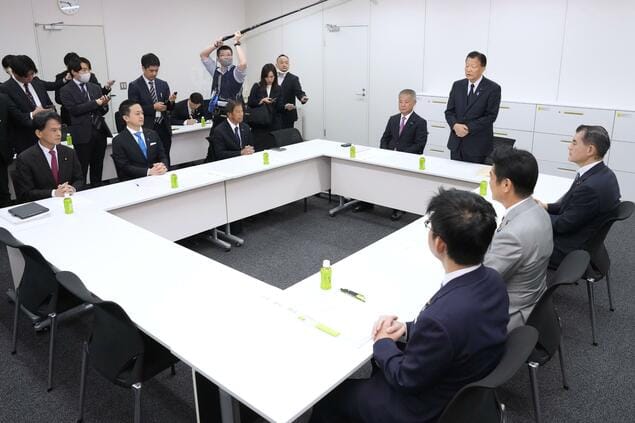
The constitutional landscape in Japan has reached a critical juncture, marked by the commencement of formal discussions between the ruling Liberal Democratic Party (LDP) and its new junior coalition partner, the Japan Innovation Party (JIP), regarding the first-ever proposed revision to the nation’s postwar pacifist Constitution. This movement follows the LDP’s recent dissociation from the Komeito party, which historically demonstrated reluctance concerning the amendment of the war-renouncing Article 9. This newly aligned partnership is significant, as the LDP, long committed to amending the 1947 supreme law drafted under the U.S.-led occupation, has now allied with the JIP, a party explicitly advocating for substantial alterations to Article 9 in light of contemporary security exigencies.
The focus of the LDP-JIP consultations centers on two pivotal areas of constitutional reform: the substantive amendment of Article 9 and the introduction of an emergency clause. Regarding Article 9, the LDP’s long-standing aim is the clarification of the legal status of the Self-Defense Forces (SDF) to conclusively resolve arguments positing their unconstitutionality. In parallel, the JIP proposes a more radical revision, specifically advocating for the deletion of a paragraph within Article 9 that prohibits the possession of military forces. This is intended to facilitate a departure from the country’s existing “exclusive defense-oriented” posture. Furthermore, the parties seek to institutionalize an emergency clause, which would legally empower the government with enhanced authority during periods of major disaster or armed conflict.
However, the path toward a formal constitutional amendment remains fraught with high institutional and political obstacles. Japan’s Constitution mandates a stringent amendment process, requiring approval by a two-thirds majority in both chambers of the Diet, followed by majority support in a national referendum. Currently, the LDP and other pro-reform forces command an overwhelming majority in the House of Councillors but demonstrably fall short of the requisite two-thirds threshold in the more powerful House of Representatives. This political reality, coupled with the existing divisions and lack of complete alignment between the LDP and JIP on the specific scope of the Article 9 revision, introduces significant uncertainty regarding the likelihood of major progress being achieved in this historic legislative endeavor.